Background
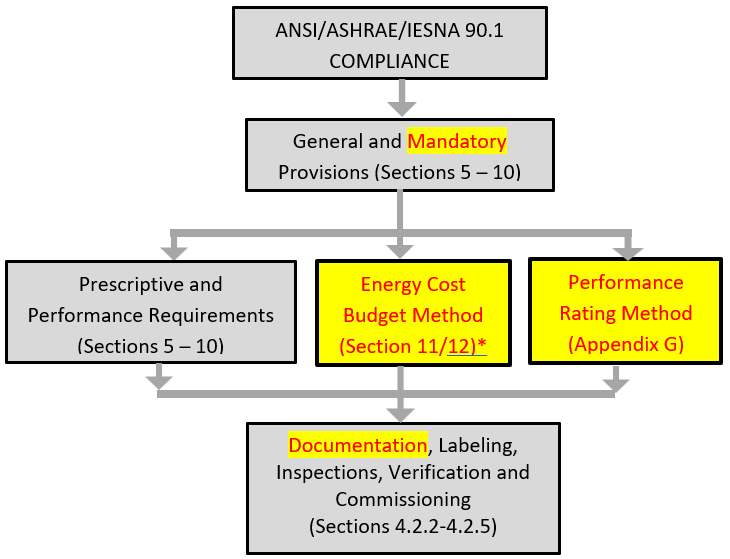
The 90.1 Energy Cost Budget and Performance Rating Method Submittal Review Manual (the Manual) is a comprehensive reference for reviewing modeling-based submittals. The Manual supports the 2016, 2019, and 2022 editions of ANSI/ASHRAE Standard 90.1, focusing on the aspects unique to whole building performance-based compliance, as illustrated in Figure 1 with the red text and yellow highlighting. Some of the enforcement steps that are the same for prescriptive and performance projects, such as site inspections and commissioning, are not addressed.
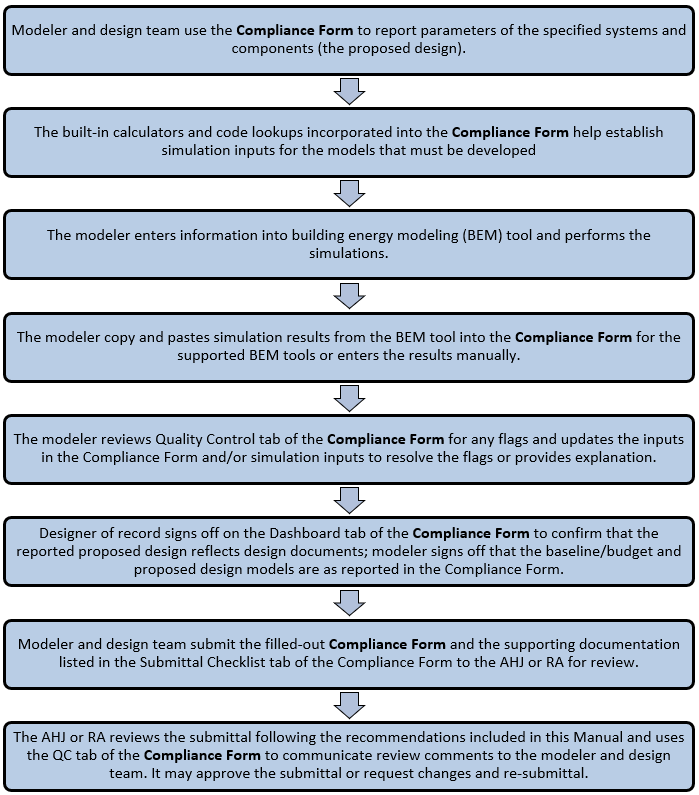
The Manual is a companion to the DOE/PNNL 90.1 Energy Cost Budget and Performance Rating Method Compliance Form (the Compliance Form) which meets 90.1 Energy Cost Budget and Performance Rating Method documentation requirements. The Compliance Form is a spreadsheet-based tool that is filled out by the energy modeler and design team and submitted, along with the required supporting documentation, to the Authority Having Jurisdiction (AHJ) or the Rating Authority (RA) for review. The review checks described in this Manual are incorporated into the Quality Control Checks tab (QC Tab) of the Compliance Form. The compliance documentation process is illustrated in Figure 2.
The QC tab allows the reviewer to identify the checks to be performed for the project based on the established high impact areas and the available review budget and record a pass/fail outcome and comments for each completed check. This Manual includes a description of each check listed in the QC tab including references to the applicable 90.1 requirements, simulation reports, and common mistakes.
This Manual includes the following:
- The review checks to verify that the proposed design reported in the Compliance Form reflects design documents; that the configuration of the baseline/budget model is established correctly, that the baseline/budget and proposed design is modeled as reported, that the simulation is error-free, and that the compliance outcome is established correctly;
- Examples and common mistakes;
- Methodologies dependent on AHJ resources for prioritizing the review to focus on the most impactful areas;
- Simulation reports for common BEM tools annotated with tips on performing specific checks;
- Checks to verify compliance with the mandatory requirements of 90.1 relevant to the simulation inputs.
For jurisdiction and rating authorities’ administrators charged with establishing a submittal review framework for their organization, see the DOE Energy Codes website for recommendations for organizing an effective and efficient submittal review process including but not limited to the following:
- Adoption of the DOE/PNNL 90.1 Performance-based Compliance Form,
- Establishing the minimum qualification requirements for energy modelers and submittal reviewers,
- And third-party reviewer scope of work template.